
12 November 2025
Google Refreshes SERP with Sponsored Products & Sponsored Results
Over the years, Google has continually updated how ads are presented on the SERP (Search Engine Results Page), from the classic yellow background and right-hand sidebar, simple Ad tags next to domain URLs, to most recently, a Sponsored message above the ad unit. As search rapidly evolves, Google has once again announced an update to paid listings that’s now rolling out.
Starting in October 2025, ads will now be grouped under relevant headings (Sponsored products or Sponsored results, plus “Businesses” for Local Service Ads). The Sponsored results heading is sticky and stays at the top of the page as you scroll, indicating which listings are paid.
In addition, a new button, “Hide sponsored results,” is positioned below the paid listings, clearly denoting where the paid results end. Clicking it collapses the Sponsored results section, allowing users to focus on organic listings.
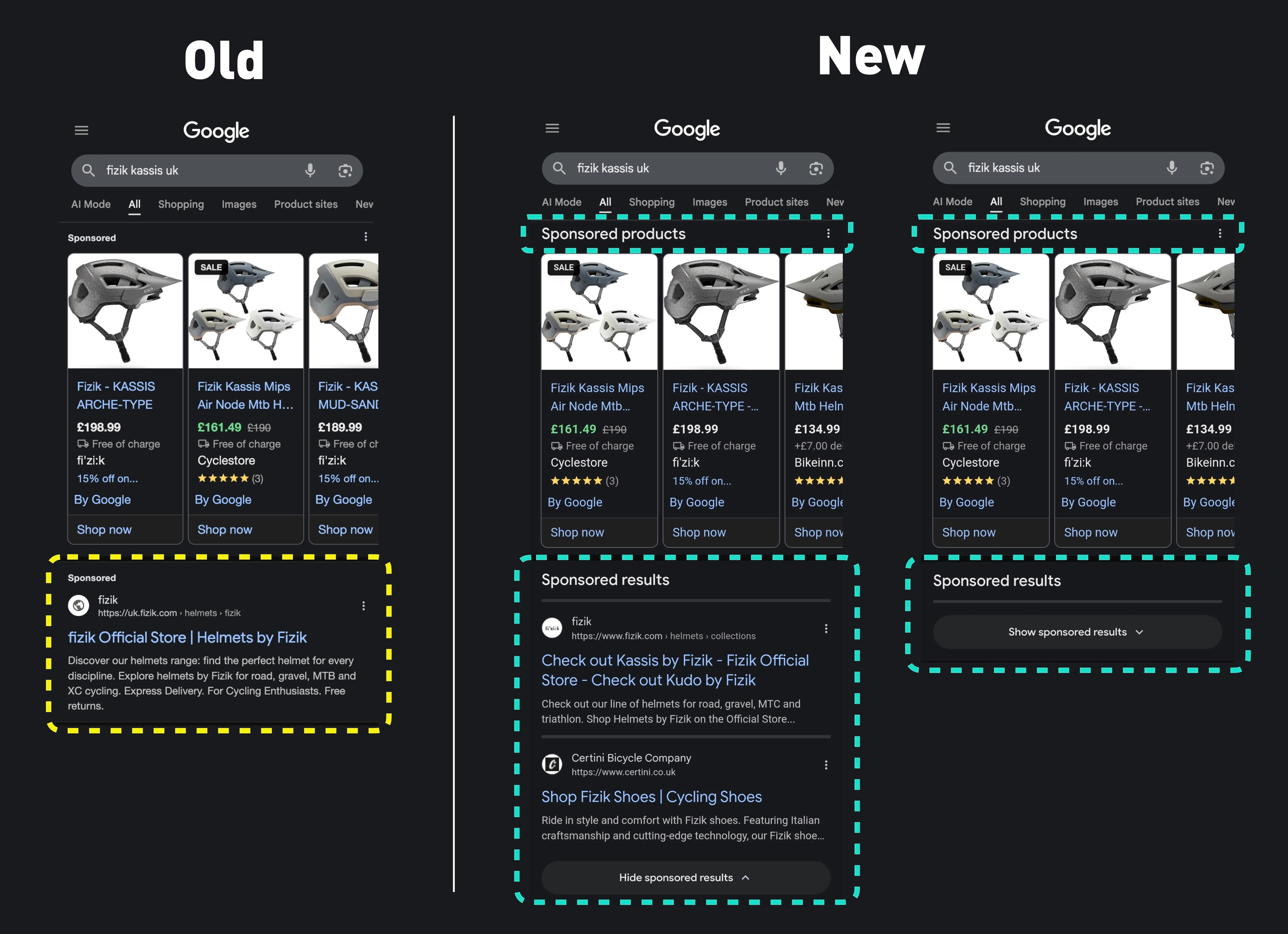
What Brands Can Expect from Google’s Sponsored Results Update
Minimal Disruption to Performance Metrics
According to Google’s Ads Liaison, the update introduces no change to ad serving—suggesting continuity in how auctions are conducted and results are delivered. Advertisers should therefore anticipate little to no immediate impact on performance.
Impressions: Ad visibility will remain stable. The “Hide sponsored results” feature resets after each session, ensuring that no paid placements are suppressed persistently.
Cost-per-click (CPC): Since this is a platform-wide presentation update, auction dynamics and pricing pressures are expected to remain largely unaffected. Over time, however, engagement with the “collapse” function could emerge as a behavioral signal, shaping future bid strategies or pricing models.
Click-through rate (CTR): A negative shift is unlikely. Given that ad engagement is directly tied to Google’s core revenue model, the company’s year-long testing of this feature strongly suggests that CTR stability was a precondition for rollout.
In short, this update refines the search experience without materially altering advertisers’ performance fundamentals.
A Clearer Framework for Ad Differentiation
Google’s decision to segment paid placements under distinct labels—Sponsored Products, Sponsored Results, and Businesses—introduces a more transparent taxonomy for ad formats. This distinction is particularly relevant as advertisers navigate hybrid campaign models that blend product, service, and brand messaging across various formats, such as Performance Max.
This move also signals a return to clearer visual delineation, which could enhance consumer trust. By making sponsored content more explicit, Google is positioning itself as both user-first and regulator-conscious, a strategic balance amid ongoing scrutiny of ad transparency.
Shifts in the User Experience
Early observations indicate the new layout feels more native on mobile, where scrolling behavior aligns with the “sticky” Sponsored Results header. On desktop, the effect is more pronounced, creating a visible separation between paid and organic listings.
This structural clarity, coupled with the ability to collapse ad units, enhances user control without diminishing advertiser visibility.
Looking Ahead
While the immediate implications are operational, the broader signal is strategic. Grouping ad formats by type may lay the groundwork for how Google will integrate monetized placements within AI Overviews and conversational search experiences. By streamlining how sponsored content is labeled and delivered, Google is effectively future-proofing its ad taxonomy for an era of multimodal, AI-driven discovery.