
March 23, 2026
Analysis: Brands Begin Reversing Tariff-Driven Price Hikes on Amazon US
The US Supreme Court’s February 20 decision to invalidate broad-spectrum executive tariffs has triggered an immediate recalibration of pricing strategies across the Amazon US marketplace. For the past year, brands have operated under record-high tariff rates, forcing many to pass costs directly to consumers. However, following the recent tariff rollback, sufficient margin relief has led a select group of high-volume brands to roll back prices.
According to Velocity by Alli, Amazon US data reveals broad price increases in 2025, at least partially driven by trade pressures. Across the top 10,000 products by total 2025 sales, 29.3% recorded year-over-year average selling price (ASP) increases that exceeded the 2.6% YoY inflation rate. This suggests that nearly one-third of the platform’s most popular items were priced specifically to absorb or offset the aggressive cost increases seen throughout the previous fiscal year.
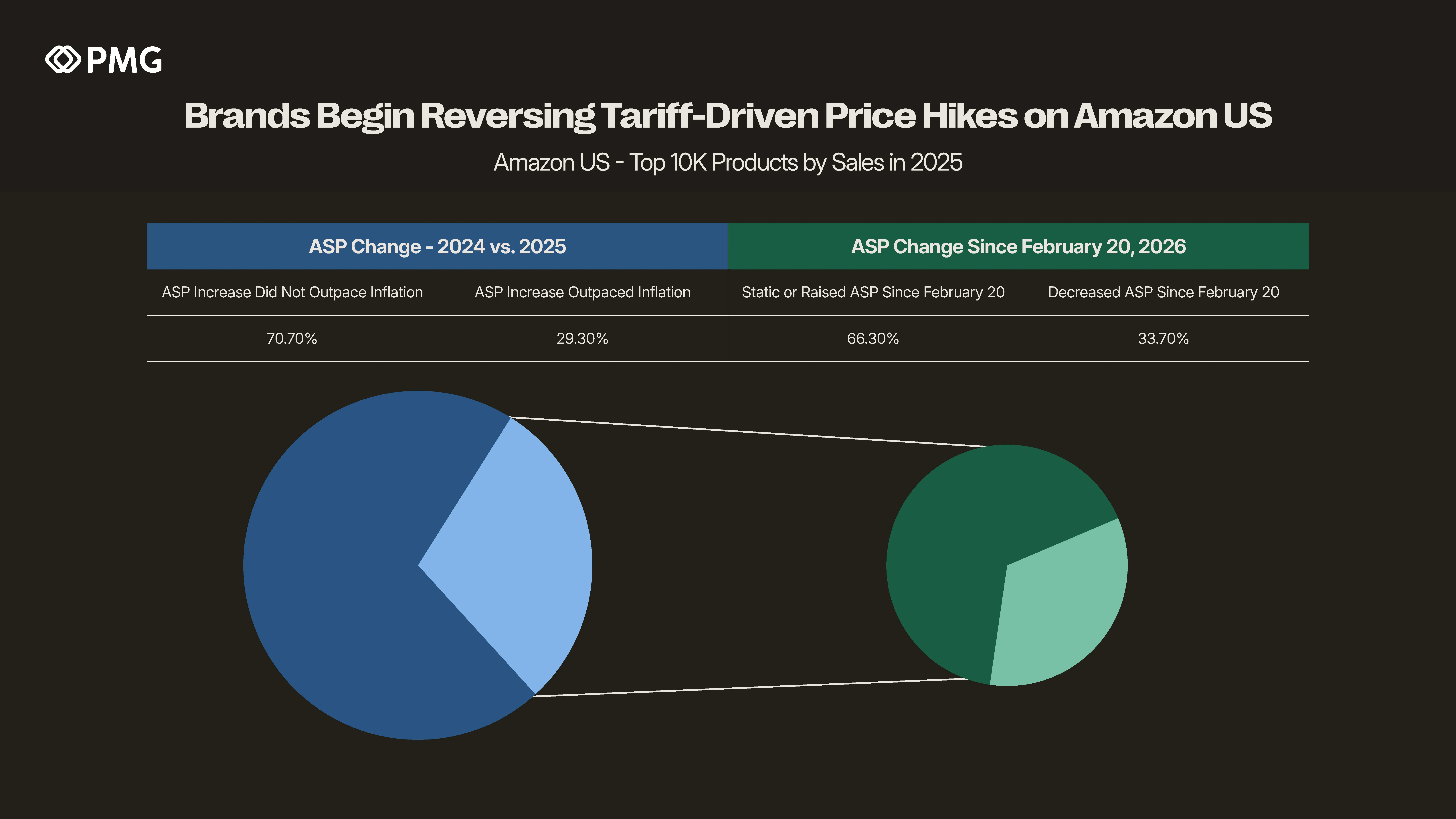
The response to the February 20 judicial ruling has been swift among this high-priced subset. Of the products that had previously posted above-inflation price increases, 33.7% decreased their ASPs versus their 2025 average following the Supreme Court decision. This trend indicates that a substantial share of market leaders moved quickly to recapture volume or defend market share as soon as the tariffs were eliminated.
Category-specific analyses highlight differences in elasticity and supply chain exposure. In Electronics, where manufacturing is heavily concentrated in regions previously targeted by tariffs, 32% of top-selling products posted YoY ASP increases above the 2.6% inflation rate. Following the ruling, 28.4% of those products lowered their prices. The relatively low reversal rate in this category reflects sticky pricing due to high-cost inventory carryover and the persistence of Section 301 duties.
Conversely, the Health & Household category showed greater price flexibility. While 31.3% of the top 10,000 products in this category posted above-inflation increases, a notable 36.2% of that group lowered ASPs after the February 20 decision. The faster pace of rollbacks here suggests that household brands—often characterized by higher purchase frequency and value-conscious consumers—prioritized price competitiveness as the macroeconomic environment shifted.
For brand leaders, these shifts underscore a widening gap between large-scale enterprises and smaller players. Many of the products currently reversing price hikes are managed by large brands with the scale advantages necessary to absorb margin pressure or anticipate significant tariff refunds. As these market leaders lower prices to meet increasingly value-conscious consumers, smaller competitors may face a difficult strategic choice: maintain elevated prices to protect thin margins or cut prices to match larger retailers in an era of continued trade uncertainty.
While these findings point to clear and immediate pricing adjustments following the February 20 ruling, they should be interpreted as directional rather than definitive. The Amazon marketplace remains highly dynamic, shaped by evolving trade policy, inventory cycles, and competitive responses across categories. As brands continue to reassess pricing strategies in real time, the extent and durability of these reversals will depend on how quickly cost structures stabilize and how aggressively competitors pursue share in an increasingly fluid environment.